
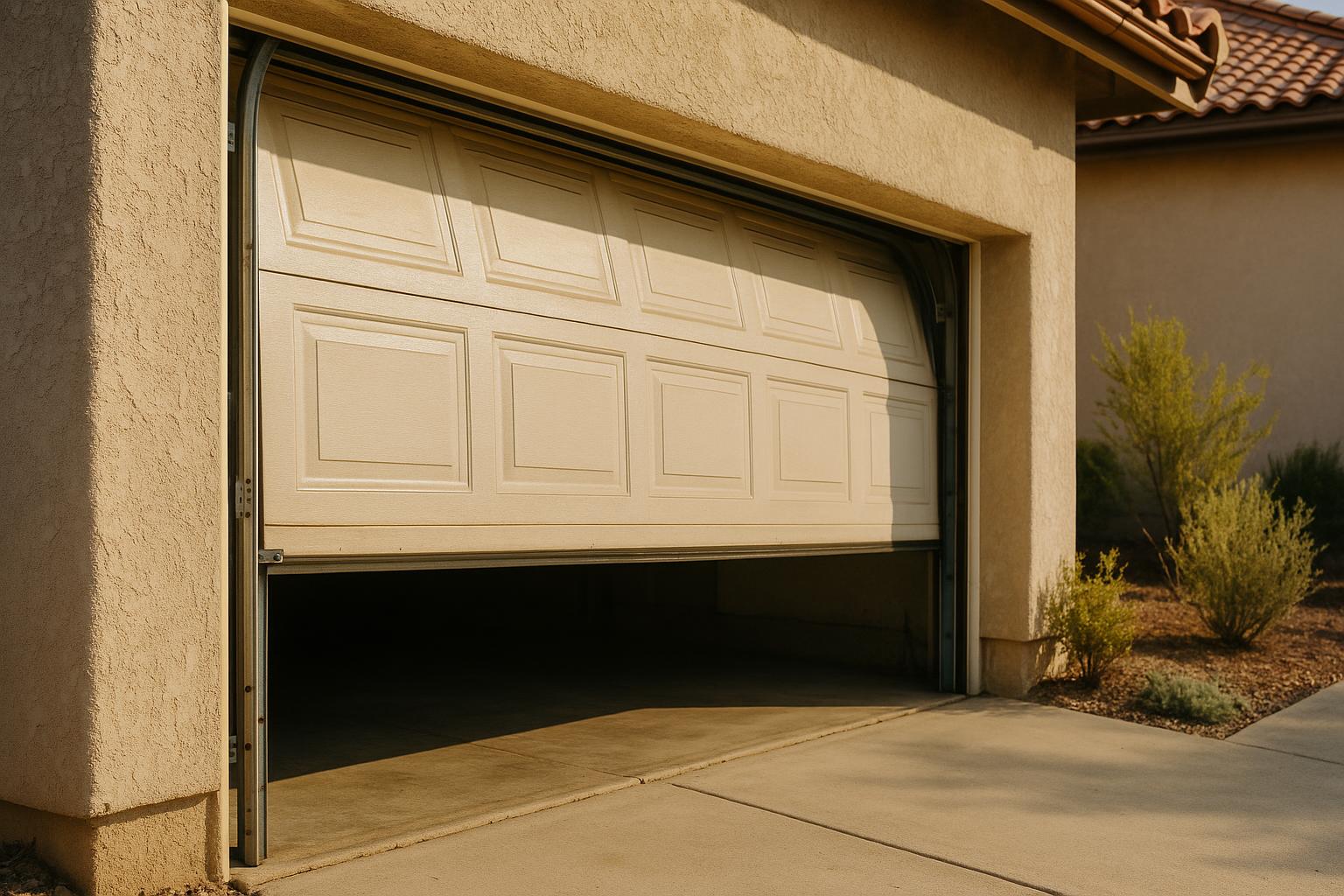
Your Garage Door Shouldn't Sound Like That
You press the button, and instead of a smooth, quiet operation, your garage door greets you with grinding, squealing, popping, or rattling. If you've been living with a noisy garage door and hoping it'll just go away, you're not alone. Many homeowners in Escondido deal with this daily, often turning up the car radio to drown it out.
But here's the thing — garage door noises aren't just an annoyance. They're your door's way of telling you something is wrong. Some sounds point to minor maintenance issues you can handle yourself. Others signal problems that could lead to a breakdown or even a safety hazard if left unchecked.
Let's break down the most common garage door noises, what causes them, and what you should do about each one.
Squealing or Screeching Sounds
A high-pitched squeal when your garage door moves is one of the most common complaints we hear from homeowners. This sound usually comes from one of two sources:
- Dry or worn rollers: Metal rollers running along dry tracks create friction, which produces that unmistakable screech. If your rollers are metal-on-metal without any lubrication, this is likely your culprit.
- Lack of lubrication on hinges and bearings: Every moving part on your garage door system needs periodic lubrication. When hinges, bearings, and pivot points dry out, they protest loudly.
The fix is often straightforward. Applying a silicone-based or lithium-based garage door lubricant to the rollers, hinges, tracks, and bearing plates can quiet things down almost immediately. Avoid using WD-40 as a long-term lubricant — it's a solvent, not a true lubricant, and it dries out quickly.
If lubrication doesn't help, your rollers may be worn out and need replacement. Upgrading from metal rollers to nylon rollers can dramatically reduce noise — a popular upgrade for Escondido homeowners whose bedrooms are near or above the garage.
Grinding or Scraping Noises
A grinding sound is harder to ignore and usually indicates a more serious issue. Common causes include:
- Misaligned tracks: If the vertical or horizontal tracks have shifted even slightly, the door can scrape against them as it moves. You might also notice the door moving unevenly or hesitating at certain points.
- Worn-out gears in the opener: If the grinding seems to come from the opener unit mounted on the ceiling, the internal gears may be stripping. This is especially common in older chain-drive openers.
- Debris in the tracks: Dirt, leaves, small rocks, and even spider webs can accumulate in the tracks over time, causing the rollers to grind as they pass through.
Start by visually inspecting the tracks for obvious debris or bends. Clean them with a damp cloth. If the tracks appear bent or misaligned, don't try to force them back into position yourself — improperly adjusted tracks can cause the door to come off its rails. That's a job for a professional.
Popping or Banging Sounds
A loud pop or bang when the door starts moving can be startling. This often points to:
- Torsion spring issues: Springs that are under extreme tension can make popping sounds as they engage. If the springs look rusty, stretched, or uneven, they may be nearing the end of their lifespan.
- Loose hardware: Over time, the constant vibration of a garage door opening and closing multiple times a day loosens nuts, bolts, and brackets. A loose hinge or bracket can produce a sharp bang each cycle.
You can carefully tighten visible nuts and bolts with a socket wrench, but never attempt to adjust or touch the torsion springs yourself. These springs are under tremendous tension and can cause serious injury. Spring-related noises should always be evaluated by a trained technician.
Rattling or Vibrating Sounds
A persistent rattle during operation is usually the easiest problem to diagnose. Check for:
- Loose chain or belt on the opener: A chain-drive opener with a loose chain will rattle and slap during operation. The chain should have only slight slack — about half an inch of play.
- Loose nuts and bolts throughout the door: Every panel, hinge, and bracket is held together with hardware that can loosen over months and years of use.
- Vibration transfer to the ceiling or walls: Sometimes the opener itself is solidly mounted, but vibrations travel through the mounting bracket into the ceiling joists, amplifying the sound throughout the house.
Anti-vibration pads installed between the opener bracket and the ceiling can reduce noise transmission significantly. This is a small, inexpensive upgrade that makes a big difference, especially in homes where living spaces are directly above the garage.
When Noise Means It's Time for Professional Help
Not every garage door noise requires a service call. Regular lubrication and tightening loose hardware are basic maintenance tasks most homeowners can handle. But certain situations call for professional attention:
- The noise started suddenly and is accompanied by the door moving unevenly or getting stuck
- You hear grinding from the opener unit itself
- Springs appear damaged, rusty, or stretched
- The door shakes or wobbles during operation
- You've lubricated and tightened everything, but the noise persists
Ignoring these warning signs can turn a minor repair into a major one. A roller that's about to fail can damage the track. A stripping gear in the opener can burn out the motor. A weakened spring can snap without warning.
Keep Your Garage Door Quiet with Regular Maintenance
The best way to prevent noisy garage door problems is with routine maintenance. We recommend lubricating all moving parts every six months — more frequently if you're in a dusty area, which many neighborhoods in Escondido and the surrounding North County communities certainly can be, especially during Santa Ana wind season.
A professional maintenance inspection once a year can catch worn parts before they fail, saving you money and preventing those middle-of-the-night surprises when a spring snaps or the opener gives out.
Need Help Diagnosing a Noisy Garage Door?
If your garage door has been making sounds that don't seem right, don't wait until it stops working entirely. At Escondido Garage Door, we diagnose the problem honestly, explain your options clearly, and get your door running smoothly and quietly. We serve homeowners and businesses throughout Escondido, San Marcos, Valley Center, Rancho Bernardo, Vista, and Fallbrook.
Give us a call, and let's figure out what your garage door is trying to tell you.