
A Frustrating Problem That's More Common Than You Think
You press the button on your garage door remote, the door starts its descent, and then — just inches from the ground — it stops and reverses back up. You try again. Same thing. Maybe it works on the third try, maybe it doesn't. Either way, you're standing in your driveway in Escondido wondering what went wrong.
This is one of the most common garage door complaints we hear from homeowners, and the good news is that it's usually caused by something identifiable and fixable. The bad news is that ignoring it can lead to bigger problems, security risks, or even safety hazards for your family.
Let's walk through the most likely reasons your garage door reverses before closing completely and what you can do about each one.
Understanding the Safety Reversal System
Before we dive into causes, it helps to understand why your garage door is designed to reverse in the first place. Federal law has required automatic garage door openers to include safety reversal mechanisms since 1993. These systems are designed to prevent the heavy door from closing on a person, pet, or object.
There are two primary safety components:
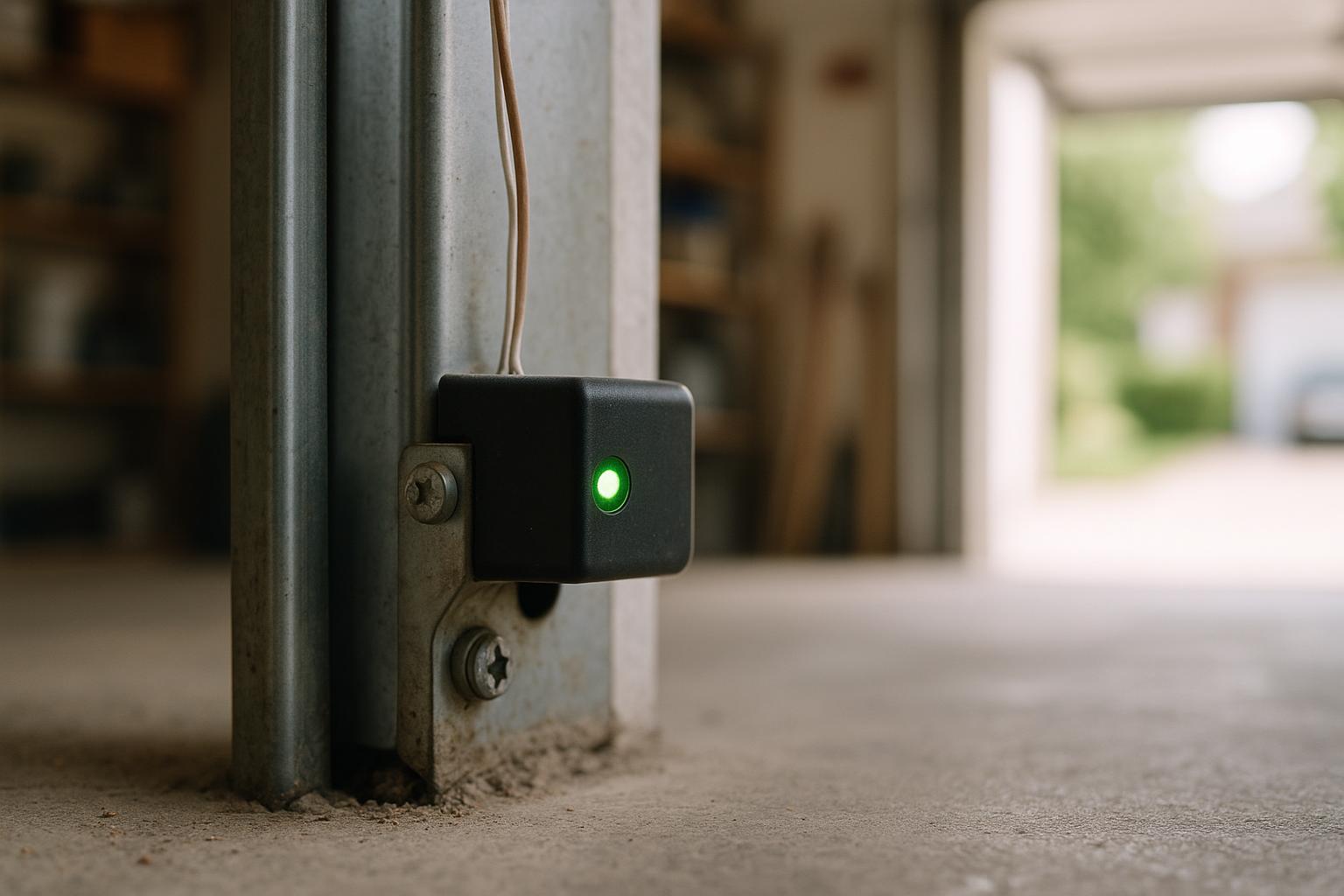
- Photo-eye sensors: These are the small sensors mounted near the bottom of your garage door tracks on either side. They project an invisible beam across the opening. If anything breaks that beam, the door reverses.
- Mechanical auto-reverse: If the door encounters physical resistance while closing — like hitting an object — it's designed to stop and reverse direction.
When your door reverses unexpectedly, one of these systems is almost always involved. The question is whether the system is responding to a real obstruction or malfunctioning.
Cause #1: Misaligned Photo-Eye Sensors
This is the number one reason garage doors reverse before reaching the floor. The photo-eye sensors on either side of your door need to be precisely aligned to maintain their invisible beam. Over time, they can get bumped, shifted by vibration, or knocked out of alignment by a stray bicycle or trash can.
Here's how to check:
- Look at both sensors near the base of the tracks. Most models have a small LED light on each unit.
- If one light is blinking or off, that sensor is likely misaligned or not receiving the signal.
- Gently adjust the sensor bracket until the light becomes steady.
- Clean the sensor lenses with a soft cloth — dust, cobwebs, and dirt can also block the beam.
In Escondido, we see this issue spike during Santa Ana wind events when debris gets blown into garages and bumps the sensors. It's a quick fix most of the time, but if the wiring behind the sensor is damaged, you'll want a professional to handle the repair.
Cause #2: Something Is Blocking the Door's Path
It sounds obvious, but you'd be surprised how often a small object near the bottom of the door causes the reversal. A broom handle, a child's toy, a leaf pile, or even a buildup of dirt along the garage floor seal can trigger the safety system.
Walk along the entire length of the door's path and clear anything that might be in the way. Pay special attention to the edges and corners where small items tend to accumulate.
Cause #3: The Close-Limit Switch Needs Adjustment
Your garage door opener has limit switches that tell the motor how far the door should travel when opening and closing. If the close-limit switch is set incorrectly, the opener thinks the door has hit something when it reaches the floor, even though it hasn't.
This often happens after a new opener installation or when someone adjusts the settings without fully understanding the calibration. Most openers have adjustment screws or digital settings for the travel limits. Your owner's manual will have specific instructions, but if you're unsure, this is a good time to call a technician. Incorrect adjustments can cause the door to slam into the floor or not close at all.
Cause #4: Worn or Damaged Tracks
The metal tracks that guide your garage door need to be clean, properly aligned, and free of dents or obstructions. If a track is bent, the rollers can bind or stick as the door moves, creating resistance that the opener interprets as an obstruction.
Visually inspect both tracks from top to bottom. Look for:
- Visible dents or bends in the metal
- Gaps between the track and the wall-mounted brackets
- Debris or buildup inside the track channel
- Rollers that appear worn, cracked, or off-track
Minor debris can be cleaned out, but bent tracks should be repaired or replaced by a professional. Attempting to bend tracks back into shape without the right tools can make the problem worse.
Cause #5: Worn Garage Door Springs
Your garage door springs do the heavy lifting — literally. They counterbalance the weight of the door so the opener motor doesn't have to work as hard. When springs wear out or lose tension, the door becomes heavier than the opener expects, and the added resistance can trigger the auto-reverse.
Signs of spring problems include:
- The door feels unusually heavy when you lift it manually
- The door opens unevenly or appears crooked
- You hear loud creaking or popping sounds during operation
- A visible gap in one of the torsion springs above the door
Important safety note: Garage door springs are under extreme tension and can cause serious injury if handled improperly. Spring replacement is not a DIY job. If you suspect your springs are the issue, call a qualified garage door technician.
Cause #6: Opener Motor or Logic Board Issues
If you've checked everything above and the door still reverses, the problem may be with the opener itself. The motor could be weakening with age, or the logic board — the electronic brain of the opener — could be malfunctioning.
Openers typically last 10 to 15 years. If yours is approaching that range and exhibiting multiple issues, replacement is often more cost-effective than repeated repairs. Modern openers are quieter, more energy-efficient, and come with features like smartphone connectivity and battery backup.
When to Call a Professional
Some of these fixes — cleaning sensors, clearing obstructions, checking for debris — are perfectly safe for homeowners to handle. But anything involving springs, tracks, electrical components, or opener calibration is best left to experienced technicians.
At Escondido Garage Door, we diagnose reversal issues every week for homeowners across Escondido, San Marcos, Valley Center, and the surrounding North County San Diego area. We show up on time, explain exactly what we find, and give you honest options — no pressure, no unnecessary upselling.
If your garage door keeps reversing and you can't figure out why, give us a call. We'll get it working right so you can stop playing guessing games in your driveway.